

Impact of Race and Culture Assessment (IRCA) Reports Across CanadA
Nusura Consulting Inc. prepares Impact of Race and Culture Assessments (IRCAs), Enhanced Pre-Sentence Reports (EPSRs), and related race- and culture-informed assessments for legal proceedings across Canada.
IRCAs are most commonly prepared after a guilty plea or finding of guilt and before sentencing. Adapted assessments may also be considered for parole, release, or other proceedings where race, culture, and systemic context are relevant.
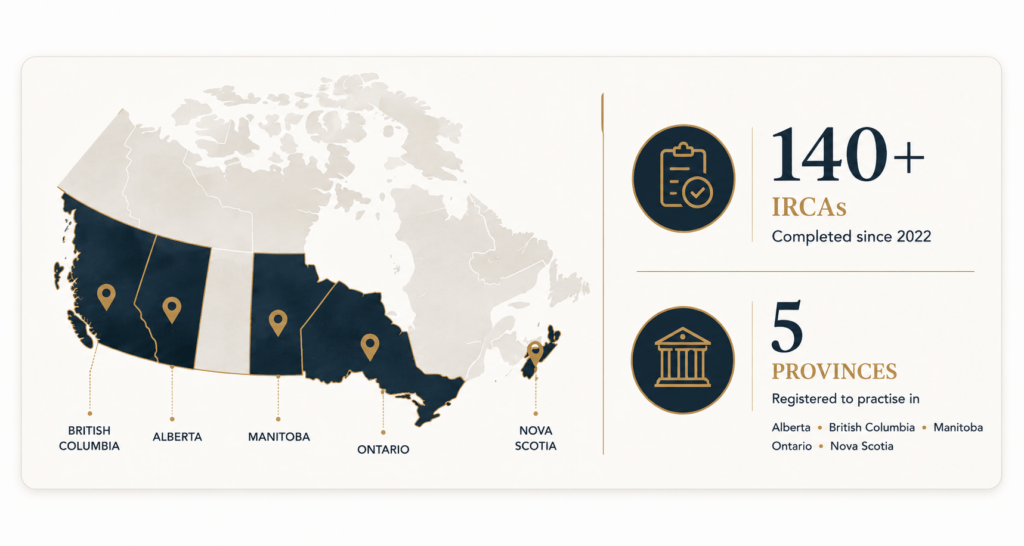
Experienced, Multijurisdictional Practice
What is an IRCA?
An Impact of Race and Culture Assessment is an individualized report that helps a decision-maker understand how race, culture, systemic racism, discrimination, trauma, and social conditions may have shaped a person’s life and circumstances relevant to a legal proceeding.
An IRCA does not excuse conduct or determine an outcome. It provides a fuller evidentiary context to support informed, individualized, and proportionate decision-making.
In Ontario, IRCAs may also be described as Enhanced Pre-Sentence Reports (EPSRs). Some practitioners informally associate race-conscious sentencing reports with R. v. Morris. Terminology and administrative requirements vary by jurisdiction.
What an IRCA Examines
The scope is tailored to the individual and the purpose of the referral. Relevant areas may include:
- Personal, family, and cultural history
- Systemic anti-Black racism and discrimination
- Trauma, loss, and significant life experiences
- Education, employment, housing, and socioeconomic conditions
- Interactions with social, health, child-welfare, and justice institutions
- Community relationships, identity, and belonging
- Strengths, protective factors, and sources of support
- Accountability, rehabilitation, and race-conscious recommendations
IRCA Service Options
IRCA Letter
A concise assessment for a referral requiring a narrower scope. It ordinarily includes one comprehensive interview, relevant record review, focused research, and written analysis. Collateral interviews are not included.
Standard IRCA
A comprehensive assessment of the individual’s history, systemic context, strengths, and circumstances. It ordinarily includes two comprehensive interviews, relevant record review, supporting research, up to three collateral interviews where appropriate, and individualized recommendations.
Standard IRCA with Additional Scope
An expanded assessment for complex or multifaceted circumstances. Additional scope may involve extensive records, multiple systems or jurisdictions, complex trauma and family histories, broader research, or additional collateral engagement.
The appropriate format is determined after reviewing the purpose, scope, available records, and anticipated deadline.
Why Counsel Choose Nusura
Dr. Duhaney brings more than 20 years of frontline, research, teaching, and leadership experience concerning anti-Black racism, trauma, criminalization, gender-based violence, and systemic inequities.
Nusura’s approach combines:
- Specialized expertise in anti-Black racism, trauma, and criminal justice
- Rigorous interviewing, record review, and research
- Culturally grounded and evidence-informed analysis
- Individualized recommendations responsive to the referral
- Clear and timely communication with counsel
Professional Independence
An IRCA is an independent professional assessment, not legal advice or an advocacy document. It provides a balanced analysis of the individual’s experiences, strengths, systemic context, and circumstances relevant to the proceeding.
Selected Judicial Consideration
In R. v. Wint, 2023 NSSC 412, the Supreme Court of Nova Scotia considered an IRCA prepared by Dr. Patrina Duhaney. The Court recognized the report’s significance in contextualizing the individual’s circumstances and described it as compelling.
Frequently Asked Questions
Who can request an IRCA?
IRCAs are ordinarily requested by legal counsel. A prospective client, family member, or support person may contact Nusura for preliminary information, but coordination with counsel is generally required before an assessment begins.
When should counsel make a referral?
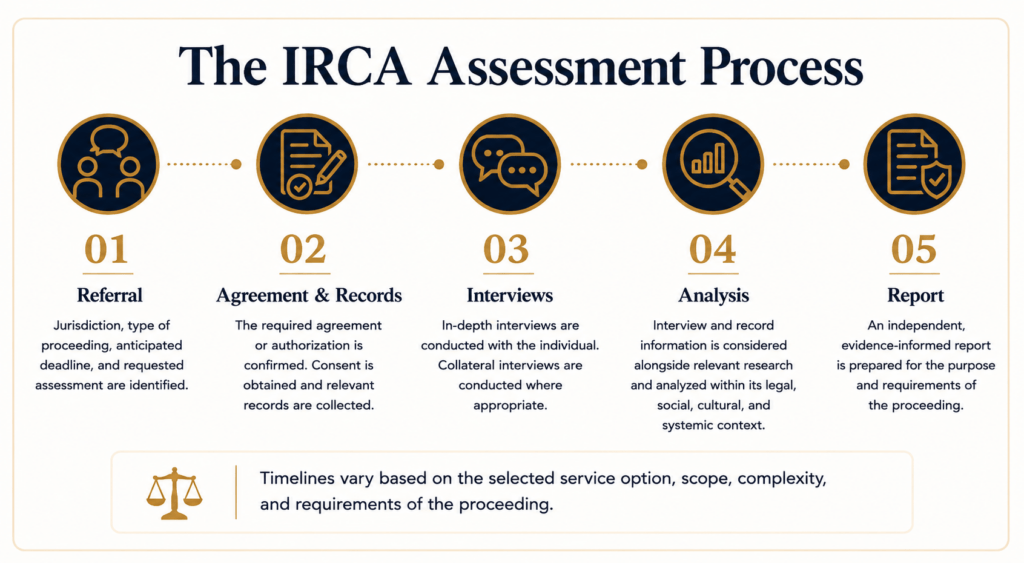
A referral should be made as early as possible after a guilty plea or finding of guilt, or when a race- and culture-informed assessment may be relevant to another proceeding. Early referral allows sufficient time for authorization, records, interviews, research, and report preparation.
How long does an IRCA take?
An IRCA Letter generally requires at least one month. A Standard IRCA ordinarily requires two to three months. Complex assessments, delayed records, participant availability, or additional scope may affect the timeline.
Can an IRCA support parole, release, or another proceeding?
IRCAs are primarily used at sentencing. In appropriate circumstances, an adapted assessment may assist with parole, release, or another criminal or non-criminal proceeding. Suitability and scope depend on the purpose of the referral and applicable jurisdictional requirements.
Is a service agreement required?
Direct engagements require a signed service agreement or engagement letter. Where Nusura is retained through a legal aid plan or contracting organization, the applicable authorization and contracting process applies.
Discuss an IRCA Referral
Contact Nusura with the jurisdiction, type of proceeding, anticipated deadline, and requested scope. If the referral appears suitable, the confidential intake and document requirements will be provided directly. Counsel can also review our resources for lawyers working with IRCAs, including guidance on preparing for an IRCA.